Beschrijving
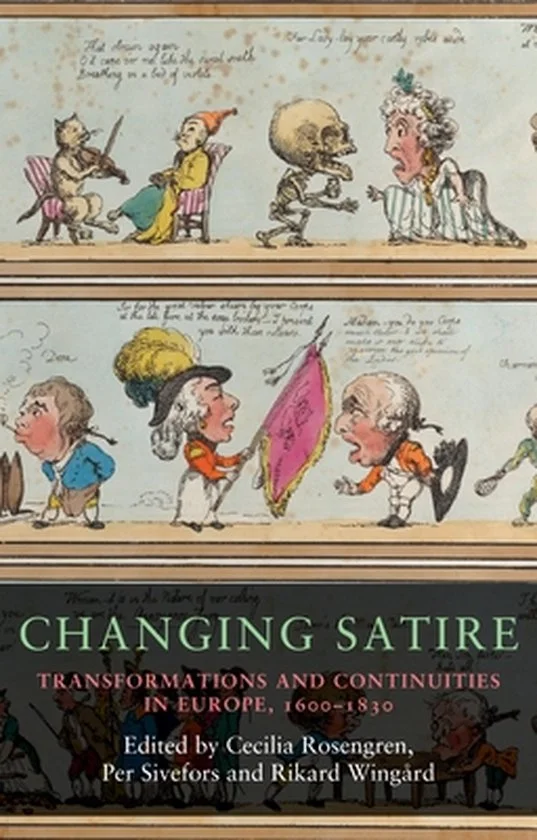
This edited collection, with contributions from literary scholars and art historians, maps how satire became a less genre-driven and increasingly visual medium in the early modern period. It features material on several European countries and demonstrates the range and diversity of satire in the period 1600 to 1830.
This edited collection examines the transformations of early modern European satire from the seventeenth through to the early nineteenth century. Featuring contributions from both literary scholars and art historians, it maps the changes that satire underwent in becoming a less genre-driven and increasingly visual medium.
Changing satire discusses the increasing dependence of satire on a proliferation of formats, including visual and textual media and various combinations of them. It also covers manuscript circulation, as well as the use of other literary forms for satirical purposes. Although the book discusses well-known satirists like Boileau, Swift and Gillray, it also engages with lesser-known material that previous criticism has ignored or relegated to the margins. While satire was a particularly important phenomenon in England in the period, the book traces developments in France, Italy, the Netherlands and Spain, presenting discussion of how satirical texts and artwork could move between countries and languages.
Taking a wide historical view and addressing a range of formats, Changing satire significantly demonstrates the role satire had as a transgressor of borders.
This edited collection brings together literary scholars and art historians, and maps how satire became a less genre-driven and increasingly visual medium in the seventeenth through the early nineteenth century. Changing satire demonstrates how satire proliferated in various formats, and discusses a wide range of material from canonical authors like Swift to little known manuscript sources and prints. As the book emphasises, satire was a frame of reference for well-known authors and artists ranging from Milton to Bernini and Goya. It was moreover a broad European phenomenon: while the book focuses on English satire, it also considers France, Italy, The Netherlands and Spain, and discusses how satirical texts and artwork could move between countries and languages. In its wide sweep across time and formats, Changing satire brings out the importance that satire had as a transgressor of borders.